
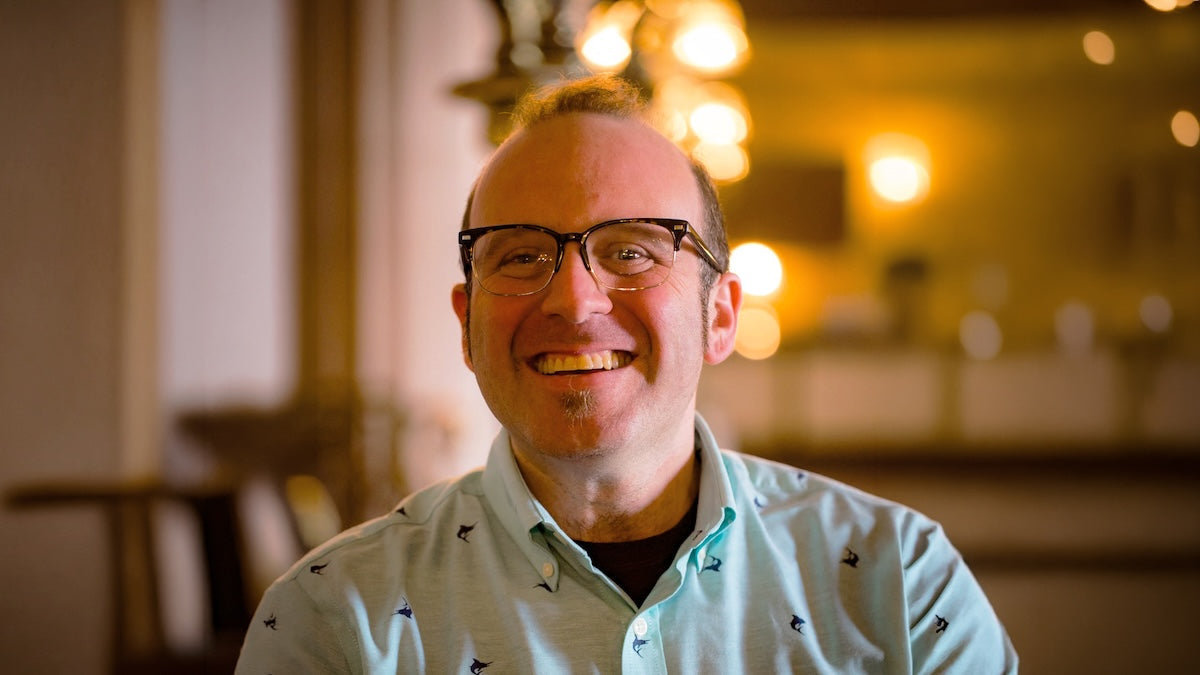
LD Justin Partier reflects on a career driven as much by curiosity as ambition. Influenced by family, inspired by photography and music, and ultimately captivated by theater, Partier pursued a career with an expressed goal in mind: making a living as a working lighting designer and associate.
Today, as Resident Lighting Director at San Francisco Opera, he combines technical precision with a storyteller’s eye, using dramaturgy and evocative imagery to support each production’s emotional arc. In opera, he embraces the complexities of an art form he describes as “its own beast,” whether overseeing new works or breathing fresh life into remounted productions.
Every production presents unique creative challenges, but the keys to success often lie beyond the lighting rig. Justin reflects on the lessons he’s learned, shares some valuable advice every aspiring lighting professional can benefit from, and much more.
Where did you grow up and what were your early years like?
I was born in New York and moved to San Francisco when I was just four. I spent each school year in San Francisco, and each summer and winter break with my grandparents in New York. It was my grandparents who introduced me to professional theater - they took me to shows, museums, as much art as possible. I loved those trips, as well as my grandfather’s stories from working in TV public relations in the mid-20th century.
Did you always see yourself working in a creative field?
I didn’t initially see myself in a creative field - I can’t really draw, I’m a terrible musician, so I always thought of myself as an appreciator and not a participator. I was enamored with photography and music on top of theater as a kid but didn’t think any of it was an option. But I ended up at the arts high school in San Francisco, focusing on the backstage side. I still wasn’t sure if I could or should focus on this past high school. Again, it was my grandfather who encouraged my interest and told me to try it. Sadly, he passed away while I was in college, but he was a major influence on this path. My grandmother saw every show she could in NYC, my own included.

How did your path to becoming a lighting designer for theater/opera come about? Do you remember when you first became enamored with lighting?
I saw a show in San Francisco when I was 8 or 9 years old. My parents claim that I reported the “number of lighting changes” first and foremost. That must have been where my interest in lighting started.
Around that same time, I got interested in photography, so much so that I took afterschool classes in a local darkroom. Studying black and white photography, studying shadows, was my real introduction to how light can change how you see an image. I was never the best photographer and gave it up in high school but that was another part that shaped me.
Do you remember the first show where you had an influence on the lighting?
Come high school, I’d found my way to theater more as an escape than a passion or ambition. I asked one of my teachers if I could design the lighting for one of the school dance showcases. We had virtually no resources and it looked terrible. But I vividly remember loving both the creative process itself and collaborating with a group of us who were all passionate about it.
That experience ended up bringing my love of lighting and music together. After that, I would go and see as many concerts as I could - sometimes sneaking into venues, if I’m honest. Music was where some of the big new lighting techniques were happening at that time, so I started to see as much music and theater as possible to draw inspiration.
By the time I went to college I abandoned my ideas of majoring in history or politics or English. I still loved those things - especially Elizabethan plays. But all I wanted to do anymore was theater. I still wasn’t the best student, electrician, or designer, but I loved it and I loved the people that studying theater brought into my life.

When did you realize that entertainment lighting could be a career for you?
It wasn’t until after college when I started working as an events electrician and stagehand in the Bay Area that I started to see how I could shape this into a real career. I caught a huge break when the Artistic Director at a small queer-centric theater I’d been working in asked me to design a show. Then another, then another over three or four years, making some great memories and even some good light cues. The Artistic Director asked me, “What do you want to be when you grow up?” I told him what I’d finally figured out - “I want to be a working lighting designer and associate.” So, I set out to make that happen.
I ended up moving to New York City after graduate school at Rutgers University full time and started working as much as possible in any capacity I could. The work was in town and out of town, sometimes close and sometimes not. I can find something to be proud of in every one of those experiences. I loved being a NYC-based designer/assistant/associate. It was life changing and I miss it every day. But when I had the opportunity to be the Lighting Director at San Francisco Opera, I just couldn’t pass it up.
When you begin working on a show, what usually inspires your lighting approach first?
I am big on dramaturgy. For me, every project no matter how big or small, has a dramaturgical voice or a story to tell. That’s especially key for me when doing new shows. I love to browse the world of the play or show and find imagery that tells the story of the piece. Sometimes it’s a single image, other times it’s just a color. Sometimes it’s a cool idea in my head I want to experiment with. Even when I design patron events at SF Opera, I think about the story of the audience experience. If the show is in a specific time or place, I study the popular and high-art scenes of the time, whether it’s music, painting, photography, or film, to look for a way into the story. I think looking outside the genre you are working on helps identify the story telling.
In what aspect of lighting do you feel you thrive the most?
Remounts present different story-telling challenges. Usually with a remount, you may or may not have worked on the show in some capacity the last time. So, I like to ask the director and designer what is the story of the lighting they chose. Not the cues themselves but the overall arch of the story. I actually really love remounts because you can get into the head of another designer and see a known story from a whole new perspective. You still bring your own eye and vision, but you also think “how would the original designer approach this challenge?” One of the best compliments I ever received was for a remount when the original designer said I “... honored the show and wasn’t afraid to adapt the lighting to what new ideas came about in the process, with my own sensibility.” Remounts are sort of an amazing mind bend - or like getting a second chance. I think that is where I thrive the most.
What is different about lighting opera compared to theater or dance, or other live events?
Opera is its own beast. When I started at San Francisco Opera, I had never lit my own opera. I had worked here as an assistant for two short contracts earlier in my career, and done a few others as an associate when I was in New York, but I’d never actually been in the “hot seat.” For lighting, the scale is fascinating - the enormity, and the big ideas. But sometimes you can also create a look that’s based on an emotion and on musicality you can’t always pull off authentically in theater.
That scale brings a different set of technical challenges. Longer shows and a bigger scale means bigger lights and more ideas, which needs time to focus them on a bigger stage. In opera it feels like you are always short on time. And because the music is the primary focus, and the needs of the music are so intricate, rehearsals are a machine that won’t stop for a light cue that doesn’t look right. As the designer, you have to work fast, do it in the moment, and hope you can get it close now and finesse it later.
My favorite thing about opera, compared to theater, is how much you have to rely on all the people around you to make it to opening. We collaborate in a way that I hadn’t seen before. And now I bring that ethos to all the work I do outside of the opera.

What opera has been the most challenging to light, and why?
Two shows immediately stand out. The most recent is Die Frau ohne Schatten by Strauss. This was my introduction to working on a David Hockney production. I approached it with a lot of color, which I had not done much of before. The set absorbed color and angle in interesting ways, so I had to think carefully about how the angle of the light affected every aspect of the scenery. No matter how long I studied the drawings, I couldn’t fully wrap my head around the scenery’s unusual angles and colors. I tried new colors that I didn’t expect to work, but somehow, they did. It challenged many of my usual ideas. It pushed me to use color in a way I hadn’t before and, overall, it made the final design feel richer.
The other one was a production I did of a version of Beethoven’s only opera Fidelio, which I co-designed with Jax Messenger. The set was a spinning cube with reflective surfaces. The main question in every cue was when to accept shining lights into the audience and when to fight it. I am not sure I fully solved that dilemma, but the design is a good attempt.
But they all have challenges in some way. I don’t think any show is easy, but these two stick out for me. Even the small show can be the most difficult thing to wrap your head around.
What skills beyond creativity are most important for succeeding as a lighting designer?
Beyond the core technical skills, there are a few key skills I cherish - and they are all about people.
Being open to collaborating and changing your ideas. Don’t get stuck in the concept if it just doesn’t look right. Be present with your collaborators and try not to be offended when someone doesn’t like your solution. Admittedly, I’m still working on that one. But there have been some great moments where the look onstage was not the original intent, but quite possibly be the best cue in the show.
Being willing to trust other people - especially your team - to help and have ideas. The best designers I have seen lean into that trust.
Giving into the process - the show may become something other than what you envisioned - and that’s ok.
Be patient with everyone, and especially yourself, during a project.
Have a sense of humor and humility.
Do sweat the small stuff, and only do it when necessary, otherwise you can make yourself and the people around you crazy. I’m still working on this one, too.
Enjoy the job, even on the hardest day.
Enjoy the people; if you are lucky, they love their job as much as you do.
What makes a lighting design feel successful to you?
It is when you think the show told the story the way you intended it to do so. Or just maybe, did it make it better in some way? That is always the goal.
If I can walk away thinking there were a few lighting moments that were something to be proud of in some way, that to me always feels like some version of success.
There is always a sense of accomplishment at every opening. Even the shows that may not have been successful or where you maybe didn’t do your best work, the process is worth it. Every show is an opportunity to learn.
From the beginning of a project to launch, what is your favorite part of the journey?
There is something exciting about seeing it all come together from load in, to focus, to tech and finally opening. And the joy it brings everyone when it is successful. I recently did two plays where the entire team were in tune with the storytelling. We all had ideas that may not have been in our direct field but made the shows that much better.
Sometimes you see one of your lighting looks in action and you think, “wow that looks like that inspiration image, like that idea we talked about in the first meeting.” And that is really powerful. Connecting the ideas or research with an actual look onstage can be a great sense of accomplishment. On remounts, it is working (sometimes) with new people and likely on a show you didn’t know beforehand.
I also love focus. You and an electrician or programmer making the art come to life, in an individual way. I still get excited for that.
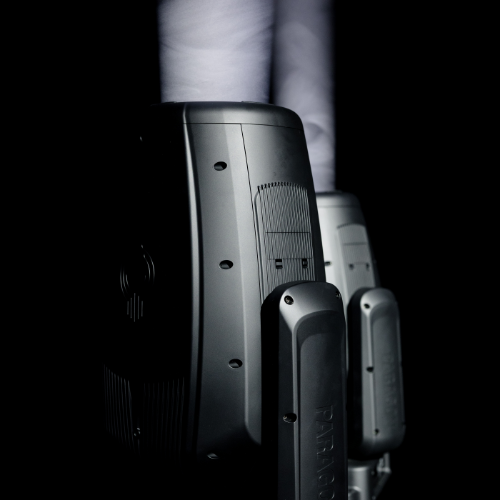
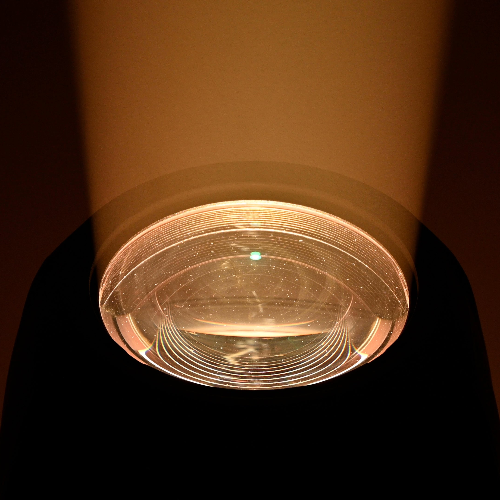
You were instrumental in the San Francisco Opera’s decision to add Elation Paragon LT fixtures to its repertory plot. What advantages has that provided and what influences your decision to adopt a new technology for a project?
We were looking to replace our older fleet of profile fixtures. Having to compete with HMI sources (moving and static) and super warm white older fixtures was one key element. Also, our plot layout changes season to season. So, we needed something versatile enough to both handle our remounts with similar colors or template looks that could be just as bright (or brighter), and also did a number of new things that many designers had been asking for. My assistants and I looked at a number of options and consulted with a number of professionals outside of our own building and ultimately decided Elation Paragon was the best light for the Opera’s needs. There are some capabilities we haven’t even used in performance just yet, but it’s already been a huge leap into the stratosphere of LED moving lights.
Are there any recent advances in entertainment lighting that you feel are especially noteworthy for theater/opera?
The ability to have more things that can change color has been a hugely positive shift. When I was starting out, I remember being excited for a single system of color scrollers, and now so much of it can change in an instant. The danger now is that everyone expects it. Having a start of color and effects in our pockets, rather than building them from scratch every time, makes the process a lot of fun. I can just open the crayon box and go.

What are your highlights so far in 2026, and what are you working on at the moment?
I mentioned those two shows I did here in San Francisco recently - Gods and Monsters at The New Conservatory Theater and MacBeth at the Magic. These were an incredible departure from my more normal work, and allowed me to work with new-to-me directors, both of whom I now adore. They were extremely collaborative, trusting and willing to push some dramaturgical boundaries. I hope to work with any of those artists again.
At the time of this publication, I have finished lighting our annual Pride Concert here at the Opera. It has been so much fun to try some new tricks and have a blast just lighting music, in different ways. A huge shout out to a lot of people who made a lot of these ideas happen.
Later this fall, I’ll be working on our newest production of The Marriage of Figaro, remounting Jane Cox’ amazing original lighting design, and also tackling a production of Simon Boccenegra for the first time. So, a new world for me to learn and new story for me to tell.
Is there something you’d like to accomplish in this industry that you haven’t already?
I have a bucket list of places I want to work, many of them outside of USA. I haven’t yet had the chance to do as much of that as I’d like.
And I always love working with new people and building new teams.
Being more involved in the mentor process is also on my mind. I was lucky to have five really influential people in my life, and now as I have really hit a stride, I want to pay it forward. Not sure I will ever be in academia but enjoy the mentorship. The SF Opera is lucky to be a part of the Hemsley Internship, which is always so thrilling to be a part of yearly, as well as the SF Opera internship. Both of these have introduced me to this idea and opened the door in some way.
What do you like to do when you’re not doing lighting?
I still love to see live music - it lets me turn off my lighting brain (most of the time). I also love museums, movies and reading just like when I was a kid. I am always looking for recommendations.
Now living in California, I take advantage of the sunshine and rainbows as much as possible and get outside when I have time. So, now it is getting a great coffee outside on a day off to read. And I try and travel as much as I can.
What’s something about Justin Partier that people might find surprising?
I hate ketchup but love tomatoes. I think I hate ketchup because I love tomatoes.
I am enamored with mid-century modern architecture and design and will do anything to see good examples in person. I am genuinely fascinated with all architecture, but post-1900s has a special place in my heart. I had an amazing teacher in grad school who opened my eyes to all of it.
My friends know but I am a big sci-fi fan. My Dad used to tell me and my friends stories he’d made up about travelling the universe as a kid, which I think is a big part of why I love the story telling aspect of the performing arts.
Contact Information:
Lighting Designer / Associate Lighting Designer
Resident Lighting Director, San Francisco Opera
https://www.justinpartierlighting.com/
Instagram: @justinlights
About Elation
At Elation, we collaborate with leading professionals in the lighting industry to help bring extraordinary experiences to life. As a designer and manufacturer of a wide range of high-performance entertainment lighting products, we’re proud to be a trusted partner to top lighting professionals and production/rental houses around the world. Our commitment to quality, innovation, and creative solutions has made us a go-to resource in the industry. We also offer an advanced line of lighting control products through Obsidian Control Systems, and a full range of dependable specialty effects called Magmatic. Elation serves clients worldwide through offices in Los Angeles, Mexico City, Canada, and the Netherlands. We invite you to take a closer look at elationlighting.com.