
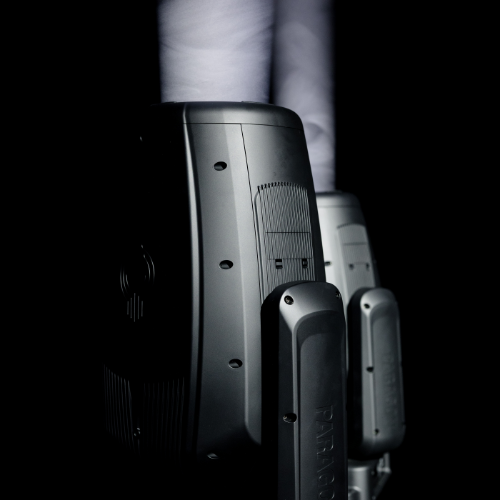
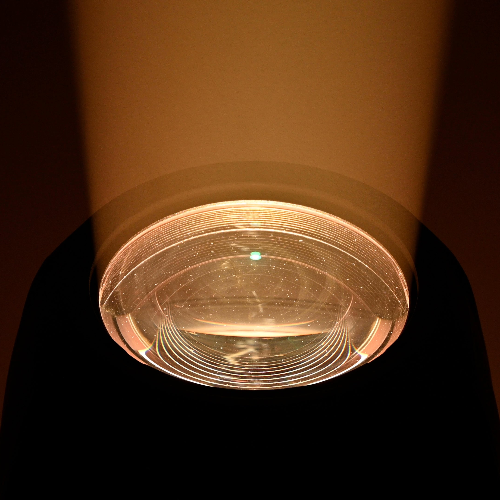
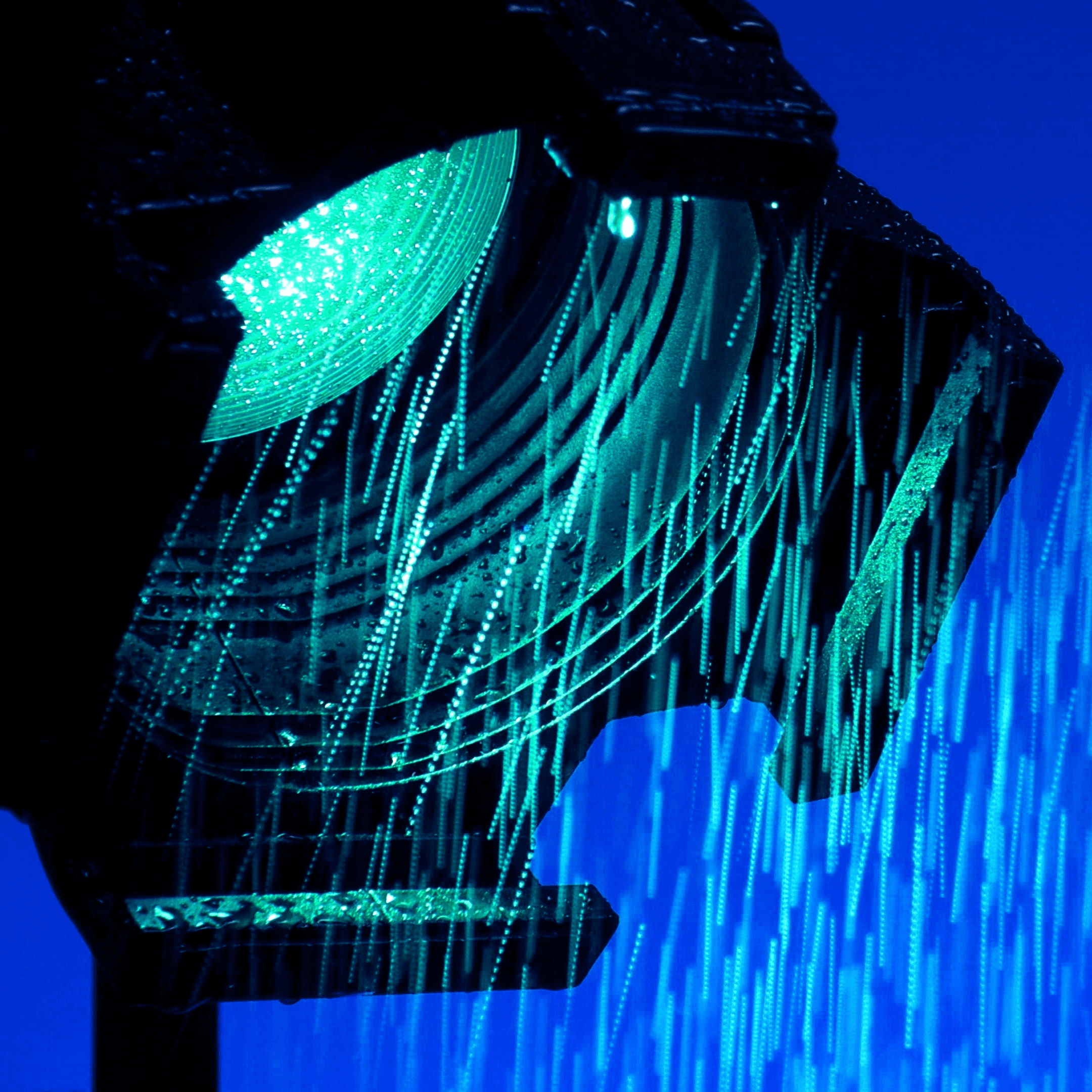
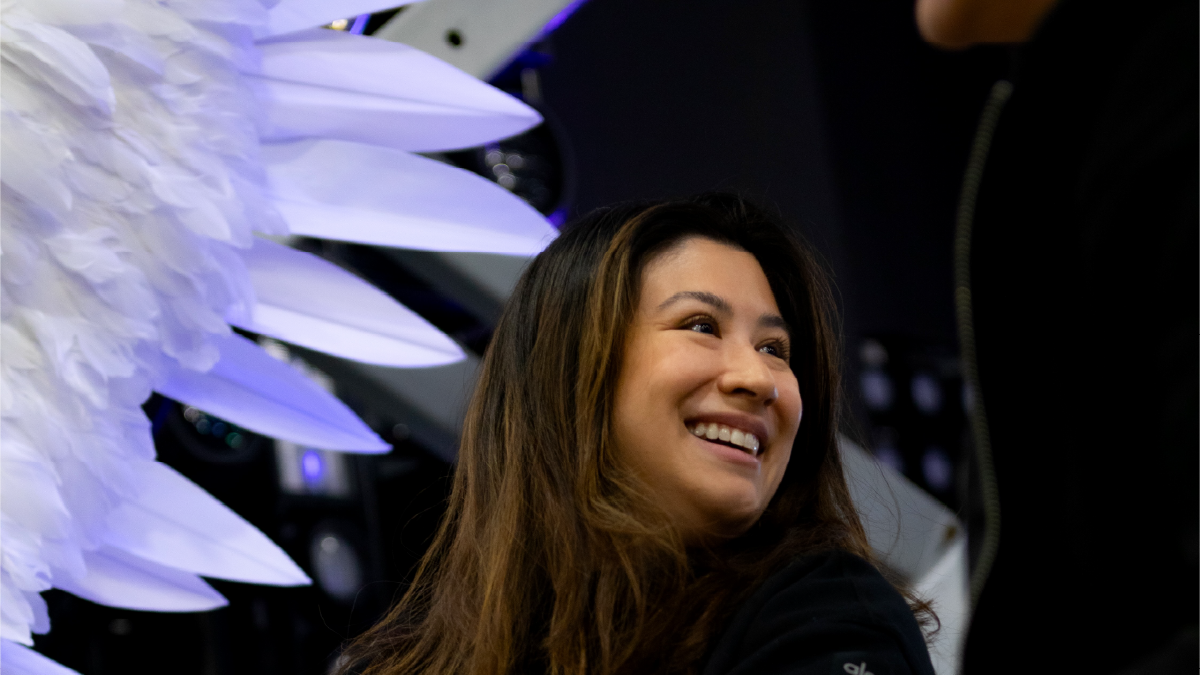
Meet the design talent behind this year’s Elation live show experience at LDI, a visitor favorite that drew large crowds and propelled Elation to win the “Most Creative Use of Light” award. An artist from a young age with a background in fashion design and the fine arts, Melody Tseng has worked as a creative director for top acts like Demi Lovato and Romeo Santos, and most recently on Alanis Morissette’s Las Vegas residency.

With a talent for transporting audiences through alluring sensory experiences, her portfolio includes collaborations with some of the biggest names in music. Her unique experience offers insights that are both inspiring and educational.
Where did you grow up? What was your youth like, and what did you want to be when you grew up?
I moved around a lot as a kid, lived with my grandparents for a while in Atlanta when I was really young, spent some time in Hong Kong, Singapore, and Taiwan, and then moved to San Francisco for high school, then went to NYC for college. I learned to be pretty independent early on. I loved to draw, and my family always bought me craft sets, painting kits, or coloring books. I wanted to be an animator for Disney before Pixar and the digital age. I loved all the hand-drawn animations. I was obsessed with cartoons. Especially old ones like Pink Panther or Looney Tunes, the music and the visuals transcended language and just brought me so much joy.
Do you remember when your interest in entertainment production came about? What fascinated you about it?
I grew up in a very artistic and musical family; my mom is a singer and used to travel and tour a lot. I think I’ve always had an interest in the entertainment industry, but production and design interest came later after college when I realized it could be a career path.
How did music and art influence you growing up?
Music and art have always been a huge part of my identity, and I felt it even as a kid watching old Michael Jackson videos and Madonna concerts. I was alone a lot so immersing myself in my own imagination and music was a form of comfort to loneliness sometimes, even at a very young age.
You have a background in fashion design and fine arts. Does that help you in your current work?
Absolutely. Fine arts allowed me to practice my skills as an artist, like drawing and painting and sculpture. Sort of like being classically trained as a dancer. I feel like it’s a strong foundation to build off of. Learning about design changed the way I looked at the world and how I approached my work. Especially in fashion, you create wearable art, garments that people live in and communicate their identity with. Being an artist is very different from being a designer; understanding both but not letting one overtake the other is sometimes a hard balance.

You’ve worked as a creative director for acts like Demi Lovato, Alanis Morissette, and Romeo Santos, and have worked with a slew of other big names like Carrie Underwood, Billie Eilish, The Eagles, Ariana Grande, Armin van Buuren, and many others. What is most important to keep in mind when you first enter a room to collaborate with a client?
Listen! Don’t get too carried away with your ideas, and don’t pitch anything you can’t deliver.
From day one to the end of a project, what is your favorite part of the process?
Usually, the beginning is hardest for me. But rehearsal is usually my favorite when it starts coming together, and the people around you also begin to understand the bigger picture and can start to see your vision, especially when set pieces start arriving, and you see bits of the show in previz, or costumes and choreography start taking shape. There’s a renewed excitement because it is becoming real, and you can solve problems in real time.
What is the most important element(s) to the success of a project?
Flexibility and an adaptable attitude. I’m tempted to say time, but I’ve actually pulled off some amazing shows in very little time… so I think because of that, adaptability is very, very important. Sometimes you just have to make it work with what you’ve got.
Where do you get inspiration for your designs?
The music. For me, it always goes back to the music. But also just life, the world around me. I like looking up at the sky, at the tops of buildings, at the architecture of everything around me. At people’s faces. I also like magazines and big coffee table books, something about physically turning a page that really gets me.

What do you see as lighting’s most essential role in production design?
It’s one of the oldest forms of ambiance and stage setting, and it visually represents sound and mood. With just one candle, you can tell a story of romance. With one solitary spotlight there can be endless possibilities, are we communicating fear? Hope? I think, especially recently, the mentality is to want more and more and more. But I think more fixtures doesn’t always mean a better-looking show. My mentor always used to say that it’s what you can do with the darkness that is essential and how you use it to communicate the music.
You’ve worked in production in both Asia and the U.S. Are the experiences essentially the same, and if not, what are the biggest differences?
Vastly different. Each Asian country also has different cultural sensibilities to how they approach a show. There is a love of excess and ornamentation in China that drives their show design. They love lots and lots of lights, lots of glitter and glam, big stages, lots of gags. Whereas in western shows I think it’s more subjective to the music and what the artist’s style is.
Is there an artist you’ve always dreamt about working with?
I used to always think that I wanted the big pop shows, but now I find myself wanting new emerging artists because it feels like more of a creative collaboration with more openness to different ideas.
Are there any particular trend(s) that you see in visuals for entertainment at the moment?
Everything is getting bigger; more emphasis on the Instagram moment.
At the Elation booth at this year’s LDI, you created a show experience in which you incorporated lighting, performance, and storytelling that proved very popular with visitors. Can you tell us about the idea behind it, and how was the experience?
The Elation show was my final project for 2025, and it was the perfect way to close out my year. I’d never done a show where I was told I could have anything I wanted production wise, so that was really fun. Looking at past showcases and presentations at LDI, it was very tech focused, even the performances with actors and people on stage. It was more about what the fixtures could do and emphasizing the new features. I just wanted to allow the audience to forget they were at a convention for a moment and just be absorbed in a live show. To enjoy the music and appreciate the dancers and be in awe of a spectacle. The lights are made for live events, so the context of what we are lighting is integral. I never imagined that we’d attract the crowds that we did, and people clapped at the end of the performances. I was very proud of what we created and presented.
Any advice you’d give to someone trying to break into creative direction or production design?
It’s a slow process, patience is key, trusting the timing of your own journey, and learn as much as you can along the way, even if it doesn’t feel relevant to what you want to do. It all informs your point of view as an artist and will help hone your skills as a designer.

What do you like to do when you’re not working on a project?
I love just taking it easy at home. When I’m working, sometimes it’s sensory overload, so when I finally get to be in my own space, I like very mundane things to help decompress. I love grocery shopping and cooking. I like to go dancing (salsa and bachata socials help me turn my brain off and be in my body and feel the music). I also love playing tennis when it’s warm out, and of course, spending time with my friends and family. Most of my family is in Asia, so it’s a luxury when I get to see them.
What’s something about Melody Tseng that people might find surprising?
I’m extremely gullible. I don’t do well with sarcasm at all. I will believe most things you tell me and probably be very confused by it. I’m more of a “what you see is what you get” type of person.